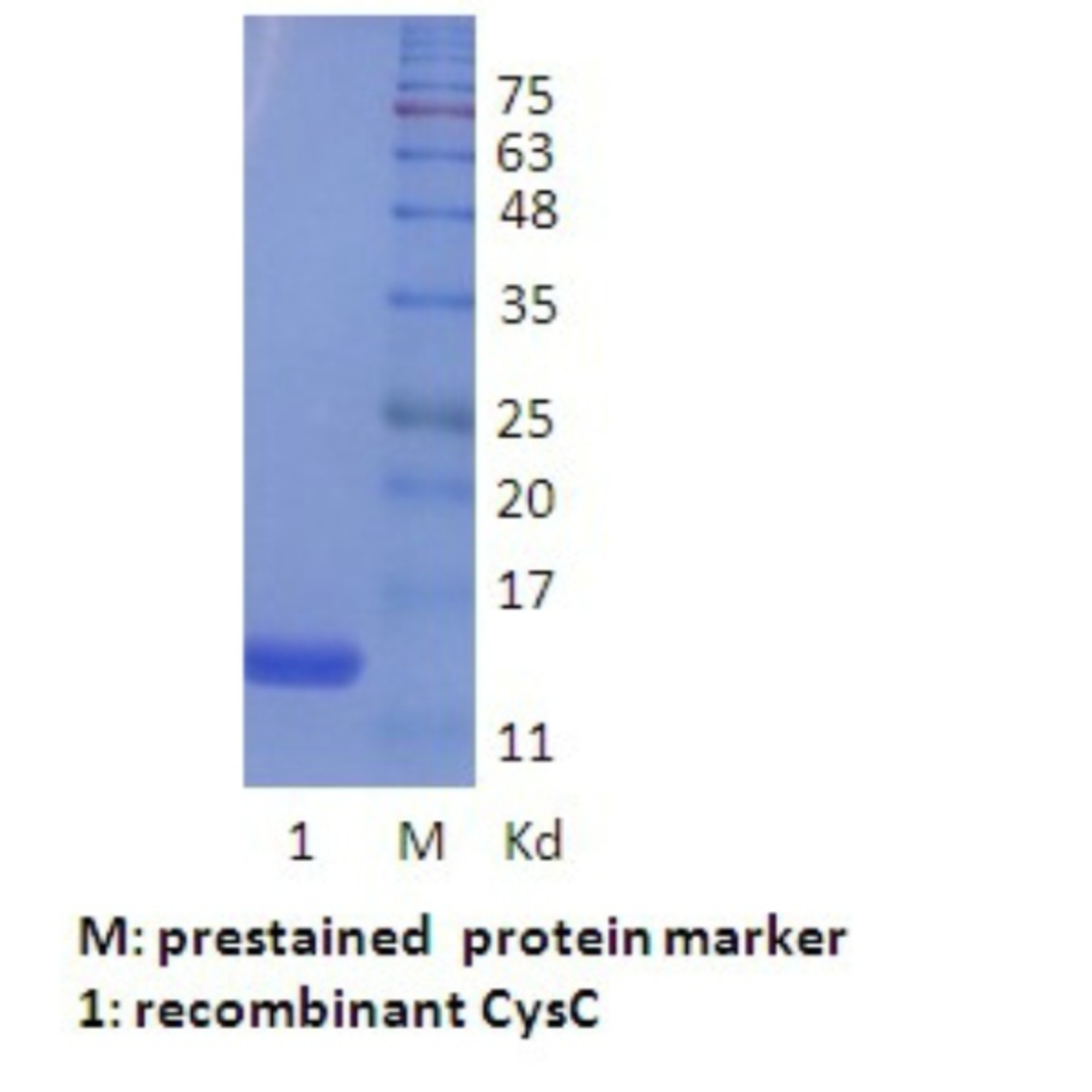
CysC detection reagent
SKU: HT-628264
Lead Time
5-15 days
Shipping
Sea freight, Air freight, Express
Payment
T/T, L/C
Sample
Available
Product details
Product overview
Glomerular filtration rate (GFR) is the most direct indicator of renal function. GFR decreases in the early stages of renal disease. The method of creatinine clearance is commonly used clinically to evaluate glomerular filtration rate. Creatinine is specific but has low sensitivity, and its increase is greatly affected by muscle weight, body surface area, and dietary intake, that is to say, it depends on age, gender, High levels will affect creatinine levels. Cystatin C (Cys-C) is a small molecular weight cystine protease inhibitor in the human body. All nucleated cells can stably produce Cys-C. Cys-C is a very stable indicator reflecting the glomerular filtration rate, because it is almost completely filtered by the glomerulus and then reabsorbed by the renal tubules, and is neither secreted nor excreted through the renal tubules. Cys-C is not affected by inflammation, gender, muscle and age changes. Therefore, CysC is a specific indicator that better reflects GFR than creatinine. At present, cystatin C has been used as a target of renal function and renal injury at home and abroad.
This reagent can be used to detect the cystatin C (Cys-C) content in human blood.
Detection principle: Cys-C in the sample reacts with the anti-Cys-C antibody latex particle reagent in the reagent to form an antigen-antibody complex to produce turbidity. The change in absorbance is detected at a wavelength of 546nm. The degree of change is the same as that in the sample. Directly proportional to the Cys-C content.
Cat# Abt-R-401
Packaging specifications: according to customer requirements
Storage conditions and validity period:
1. The reagent is stable for 12 months when stored sealed and protected from light at 2-8°C, and cannot be frozen.
2. Pay attention to avoid contamination of opened reagents. The reagents are stable in the instrument compartment (2-8℃) for 30 days.
Similar products
View all →

Others in Personal Care & Beauty Chemicals
View all →
#4-31606Versatile Aluminum Can Packaging – Fully Recyclable for Solid and Liquid Products
Quote on request