Homocysteine (hydrolase method) detection reagent
SKU: HT-628241
Lead Time
5-15 days
Shipping
Sea freight, Air freight, Express
Payment
T/T, L/C
Sample
Available
Product details
Product overview
Homocysteine (Hcy) enzymatic detection is a convenient and stable liquid dual reagent, which is very suitable for analyzers that require two reagent systems. This testing method is fast, accurate, low-cost, and can be effective An alternative to cumbersome and expensive immunochemical methods. This Hcy detection method can provide specific and convenient packaging for different instruments, thereby eliminating the inconvenience caused by transferring reagents back and forth when operating on different fully automatic biochemical analyzers. This Hcy detection method has good correlation with high-performance liquid chromatography and immunochemical methods, is accurate and reliable, has a linear range of 3-50 μmol/L, and the coefficient of variation CV of intra-batch and inter-batch differences is <7.5%. This Hcy detection method is obviously not interfered by lipemia and hemolytic substances, and eliminates the "carry" interference of iron or lipase reagents that occurs in other methodologies. What is more significant is that this detection method is not interfered by endogenous cystathionine, so it can be used to detect Hcy in patients with kidney disease with greater confidence.
Features
1. High specificity and good precision.
2. Liquid dual reagent, fast and simple, suitable for fully automatic biochemical instrument detection.
3. Wide linear range, 0-50μmol/L.
4. Good stability. Without calibration for 28 days after opening the lid, the deviation is less than 10%.
Intended use: For in vitro diagnostic use only.
Determination principle:
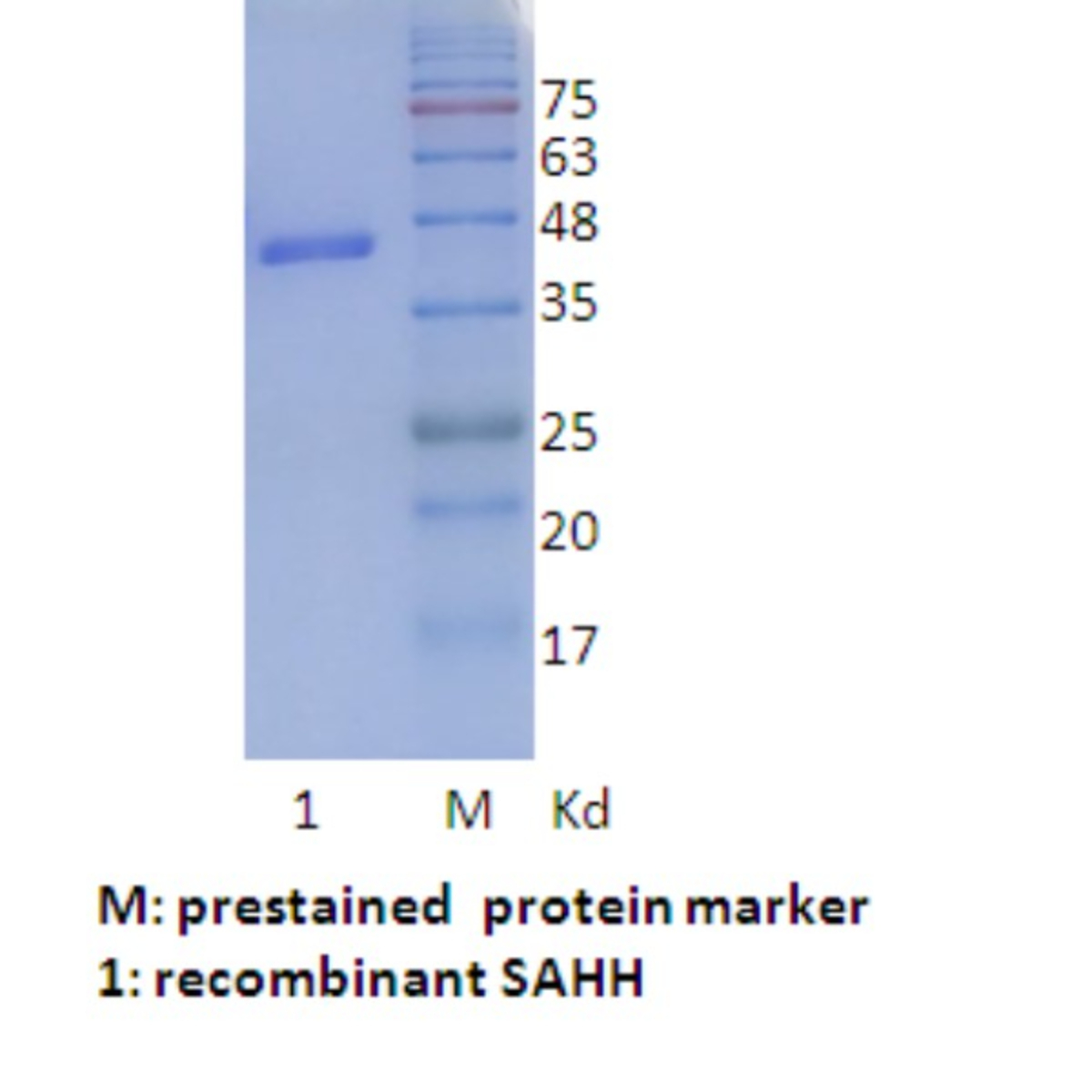
When measuring homocysteine content, oxidized Hcy is first reduced to free Hcy, and then reacts with the co-substrate S-adenosylmethionine (SAM) under the action of Hcy methyltransferase (HMT). Produce methionine (Met) and S-adenosylhomocysteine (SAH). SAH is subsequently detected by conjugation with SAH hydrolase (SAHH), adenosine deaminase (ADA) and glutamate dehydrogenase. SAH is hydrolyzed to adenosine (Ado) and Hcy by SAHH. The formed Hcy circulates into the initial, HMT-catalyzed transmethylation reaction of Hcy and the co-substrate SAM, and the formed Ado is immediately deaminated to form inosine and ammonia. , and finally, glutamate dehydrogenase (GLDH) catalyzes the reaction of ammonia with α-ketoglutarate and NADH to form NAD+.
Similar products
View all →


Others in Personal Care & Beauty Chemicals
View all →
#4-31606Versatile Aluminum Can Packaging – Fully Recyclable for Solid and Liquid Products
Quote on request