GlutathioneS-Transferase(GST)
SKU: HT-628218
Lead Time
5-15 days
Shipping
Sea freight, Air freight, Express
Payment
T/T, L/C
Sample
Available
Product details
Product overview
Glutathione S-Transferase(GST 2.5.1.18)is polymerized by two subunits(25-27 kDa)in the manner of homologous or heterologous. The pI of GST is pH4-5, the N-terminal of the subunit has conserved serine or tyrosine residues, while it’s hydroxy and the mercapto of glutathione (GSH) forming hydrogen, which are the specific binding sites of GSH.
GST is a group of multifunctional isoenzymes which are widely distributed in various biological. It is related to liver detoxication and mainly present in the liver but little in the tissues of kidney, intestine, testis and ovary. Its main function is to catalyze some endogenous or exogenous electrophilic groups of harmful substances to coupling with the mercapto of glutathione, and then increasing its hydrophobic to cross the cell membrane easily and excreted after being decomposed, thus achieving the purpose of detoxification. Since GST is rich in the liver cytoplasm, so it is rapidly released into the blood and then increasing the activity of GST when the liver cell is damaged.
In the genetic engineering, GST is commonly used to construct high efficiency expression vectors, and then co-expression with a number of difficult expression proteins as a molecular chaperone, finally achieving a soluble expression. In addition, GST antibody can do some western blot experiments to detect gene co-expression which is significant in the study.
Product description:
Appearance: White powder, lyophilized or colorless liquid
Preservation solution: PBS, PH7.0
Basic information:
Cat#: Abt-P-5004
Source: Recombinant expression
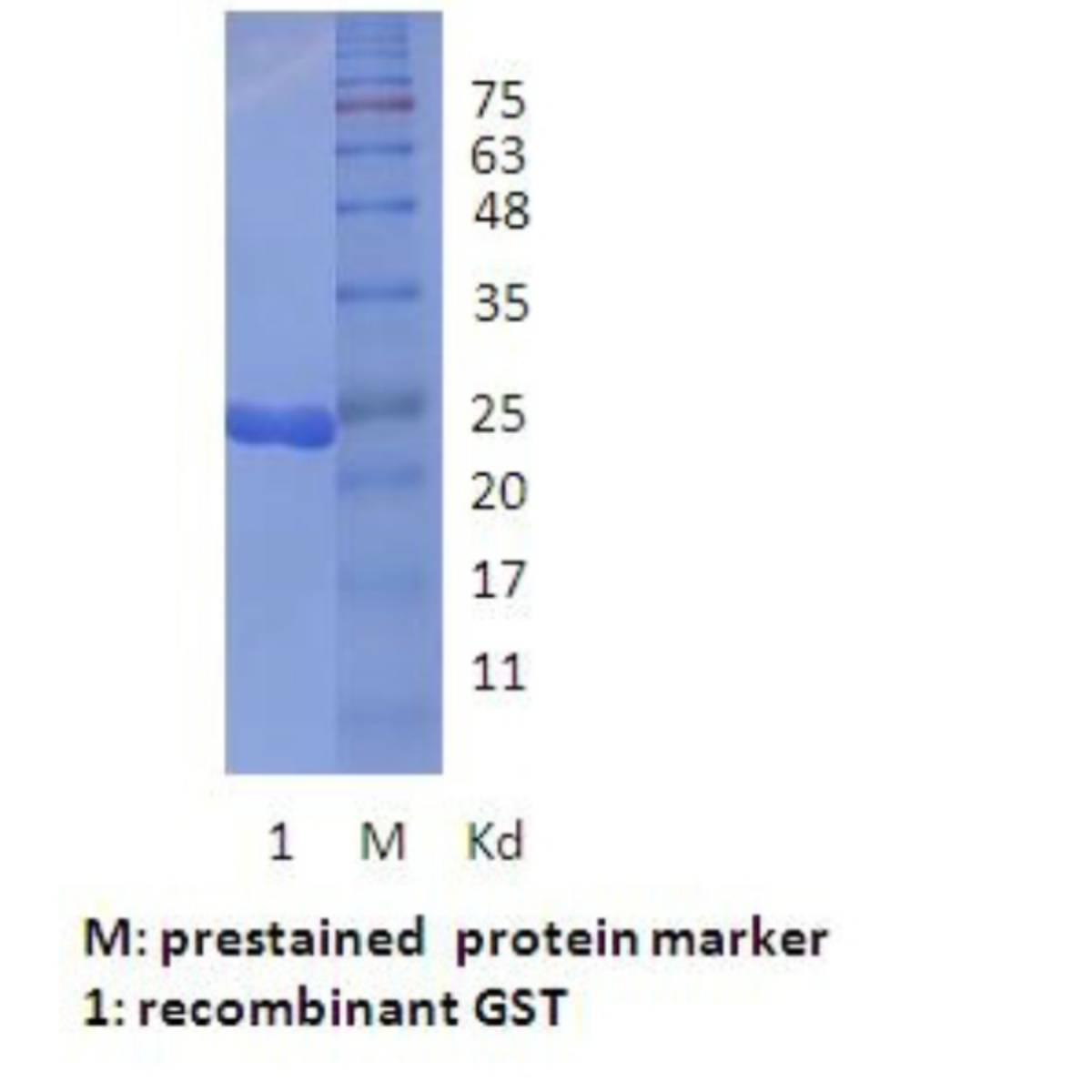
Molecular weight: About 26kDa (SDS-PAGE detection)
Purity: ≥90% (SDS-PAGE test)
Storage: 4℃, store at -20℃ for long-term preservation
Transportation: Cold packs
Safety tips: Do not use for human experiments
Similar products
View all →


#4-31606Versatile Aluminum Can Packaging – Fully Recyclable for Solid and Liquid Products
Quote on request

Others in Personal Care & Beauty Chemicals
View all →