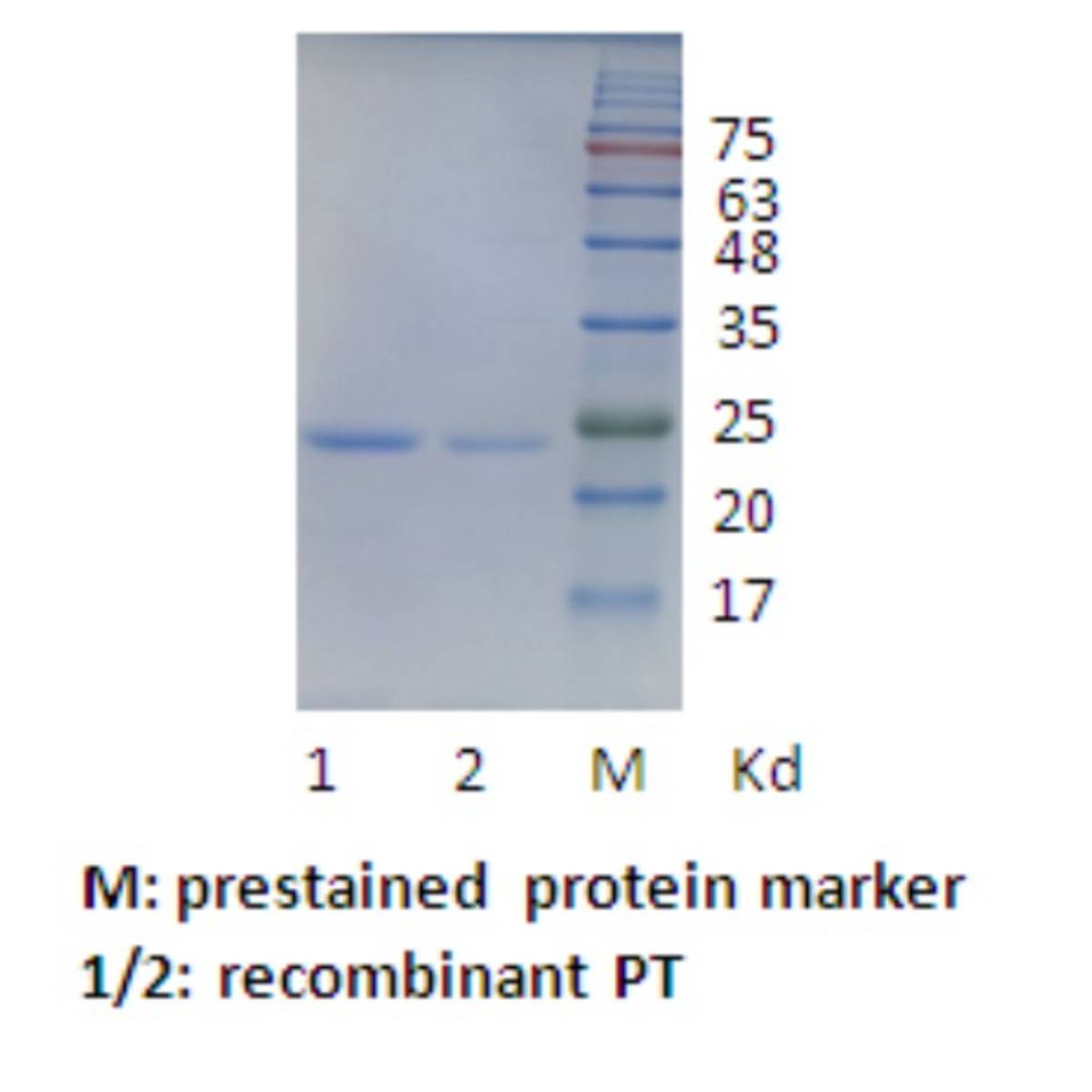
Pig Trypsin(PT)
SKU: HT-628217
Lead Time
5-15 days
Shipping
Sea freight, Air freight, Express
Payment
T/T, L/C
Sample
Available
Product details
Product overview
Trypsin (Parenzyme, EC 3.4.4.4) is a type of protease, a serine proteolytic enzyme extracted from the pancreas of cattle, sheep, and pigs. In vertebrates, functions as a digestive enzyme. In the pancreas, trypsinogen, the precursor of trypsin, is synthesized and secreted as a component of pancreatic juice. It is decomposed into activated trypsin under the restriction of enterokinase or trypsin. It is an endopeptidase that can break down polypeptide chains. Cleavage of the carboxyl side of lysine and arginine residues. It not only functions as a digestive enzyme, but also limits the decomposition of precursors of other enzymes such as chymotrypsinogen, carboxypeptidase, phospholipidase, etc., and activates them. It is the most specific protease and becomes an indispensable tool in determining the amino acid arrangement of proteins.
Trypsinogen consists of more than 220 amino acids, contains 6 pairs of disulfide bonds, and has a molecular weight of approximately 24kDa. The serine residue in the active site is an indispensable serine protease. Under the autocatalysis of enterokinase activity, the peptide bond between the N-terminal lysine and isoleucine residues of the zymogen is hydrolyzed, releasing the valerian-day-day-day-day-lysine 6 peptide to generate active of trypsin. Trypsin can be used for cell digestion. In addition, trypsin is one of the tool enzymes necessary for the production of insulin.
Dosage form: dry powder, or liquid
Storage buffer: 50mM HAc, 50mM CaCl2, 100mM NaCl, pH3.5
Enzyme activity: 120 U/mg protein
Activity unit: 25°C, pH 8.1, reaction system 3.0mL (25px light path), enzymatic hydrolysis of TAME per minute increases the absorption value at 247nm by 0.18, which is defined as one U unit.
Similar products
View all →


#4-31606Versatile Aluminum Can Packaging – Fully Recyclable for Solid and Liquid Products
Quote on request
Others in Personal Care & Beauty Chemicals
View all →