Vascular Endothelial Growth Factor(VEGF165)
SKU: HT-628215
Lead Time
5-15 days
Shipping
Sea freight, Air freight, Express
Payment
T/T, L/C
Sample
Available
Product details
Product overview
Vascular endothelial growth factor (VEGF) is also known as vascular permeability factor (VPF), or VEGF-A.
VEGF-A is a dimeric glycoprotein composed of two identical subunits (Mr 23000) cross-linked by disulfide bonds. The molecular weight is 40-45KD. Its gene is located on chromosome 6p21.3, with a full length of 14kb and consists of 8 exons. It consists of sub-sub and 7 introns. Due to different splicing methods of its mRNA, 7 existing forms are formed, namely VEGF121, VEGF145, VEGF148, VEGF183, VEGF165, VEGF189, and VEGF206, each containing 121-206 amino acids and connected by disulfide bonds to form homodimers. VEGF165 has 44 amino acids encoded by exon 7 and has a high affinity for heparin.
VEGF121, VEGF145, and VEGF165 can all induce endothelial cell proliferation and new blood vessel formation in vivo. Most cells expressing VEGF-A can produce several VEGF-A variants at the same time, with VEGF121 and VEGF165 being the most common, followed by VEGF189.
Each variant of VEGF-A (VEGF121~206) has different binding abilities with heparin and heparin sulfate. Heparin or heparin sulfate can enhance the affinity of VEGF-A and its receptor.
Because VEGF165 has the highest abundance in cDNA amplification, it is the most widely used in clinical and animal experiments. VEGF165 is expressed in a variety of cells, including endothelial cells, macrophages, and T cells. VEGF165 participates in angiogenesis, vascular endothelial cell growth, migration, penetration, etc.
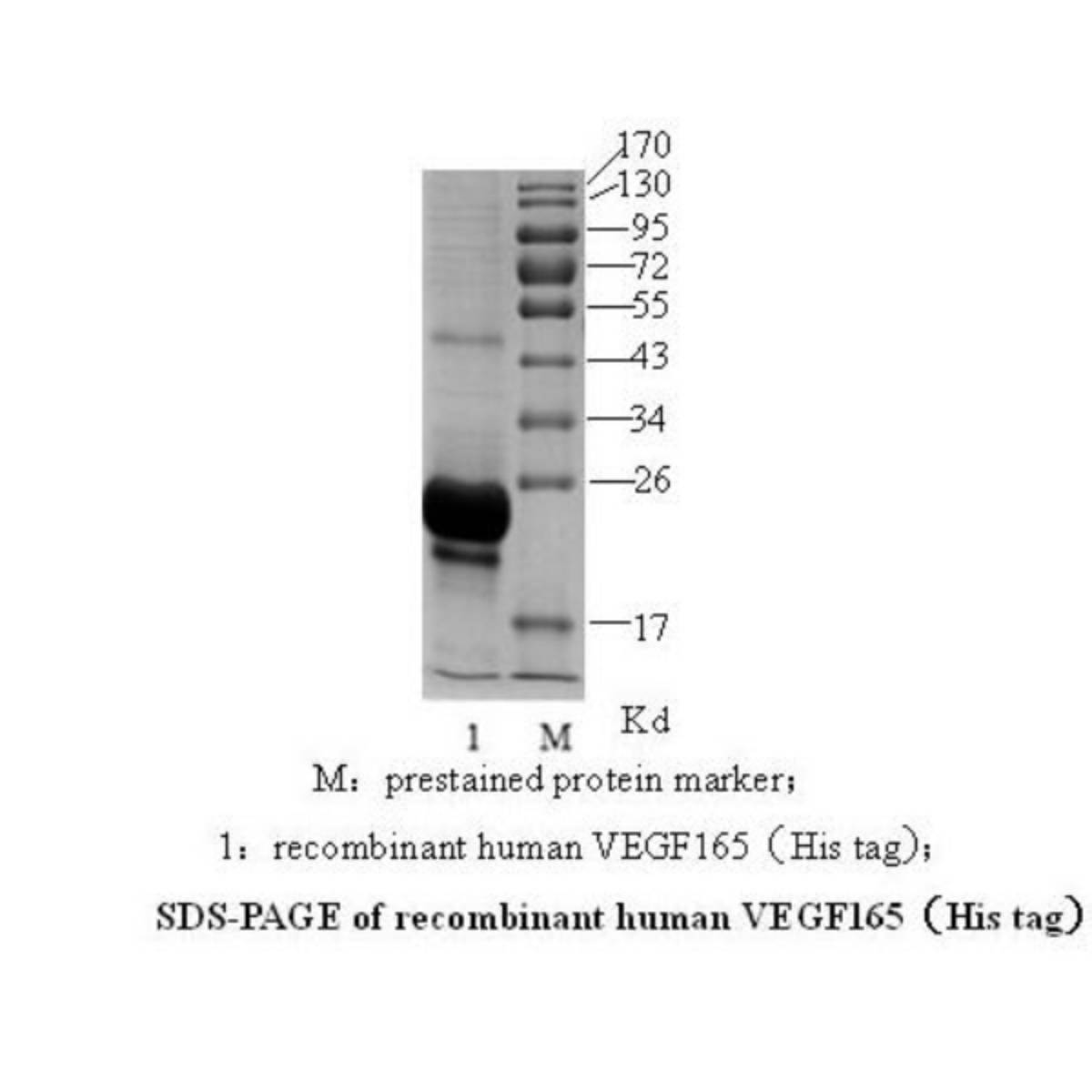
Human VEGF165 (his tag)
Cat#Abt-P-4025
Expression host: HEK293
Molecular weight: 22-25 kDa
Concentration: 1-2mg/mL
Purity: >90%
Storage environment: 1×PBS (pH: 7.4)
Storage conditions: short-term storage at 4℃, long-term storage at -20℃. Avoid repeated freezing and thawing
Safety Tips: Not for human experimentation
Similar products
View all →


Others in Personal Care & Beauty Chemicals
View all →
#4-31606Versatile Aluminum Can Packaging – Fully Recyclable for Solid and Liquid Products
Quote on request